
One article, fifty-four lines
A vest in nine sizes and six colours is not one product. Counting it as one is why the shelf says you have stock and the customer asking for 85 black is told to come back tomorrow.
One article in nine sizes and six colours is fifty-four things to count. Keep every size, brand and rate straight without writing any of it in a register.
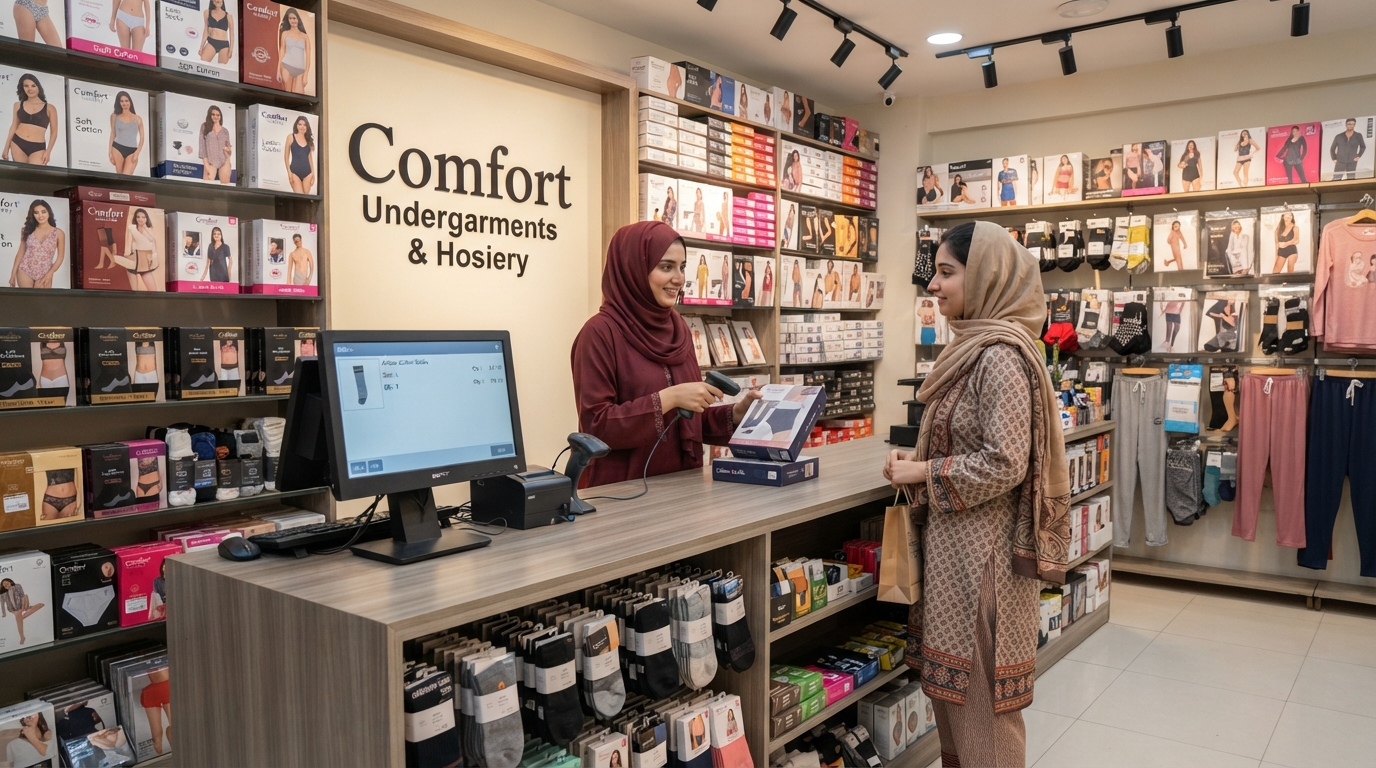
An innerwear counter carries a few dozen articles and several thousand individual pieces. Everything that goes wrong in this trade goes wrong at the size level, where nobody is looking.
A vest in nine sizes and six colours is not one product. Counting it as one is why the shelf says you have stock and the customer asking for 85 black is told to come back tomorrow.
The shop next door buys by the dozen at one rate and a walk-in buys one piece at another. Remembering which customer gets which is how margin quietly disappears.
Six brands of the same article at six landed costs. Sell the wrong one at the wrong rate often enough and the best-selling line turns out to be the worst earning one.
Every shop has dead sizes sitting in the back for two seasons. Without a per-size number nobody finds them until the space they occupy is the problem.
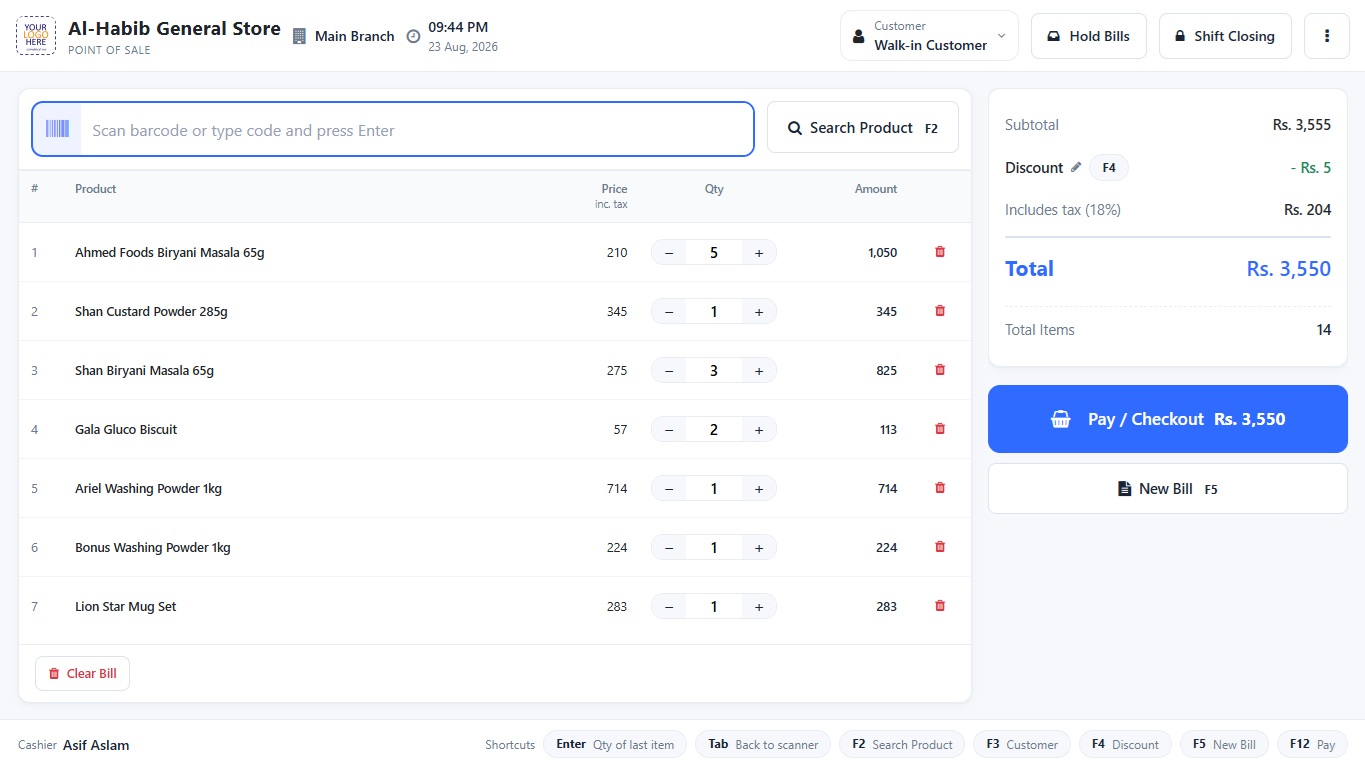
Pick the article, then the size and colour, and bill in pieces or dozens from one screen.
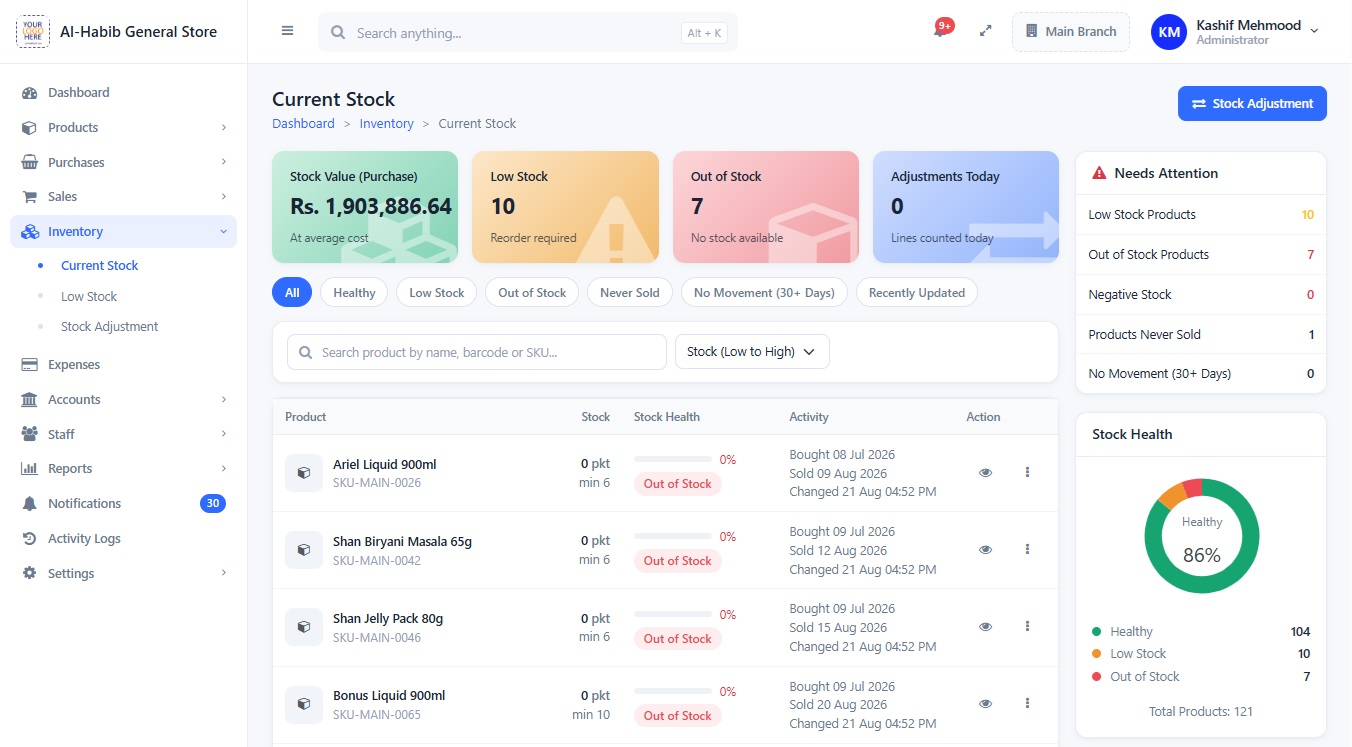
Stock held at size and colour level, so the number on screen is the number on the shelf.
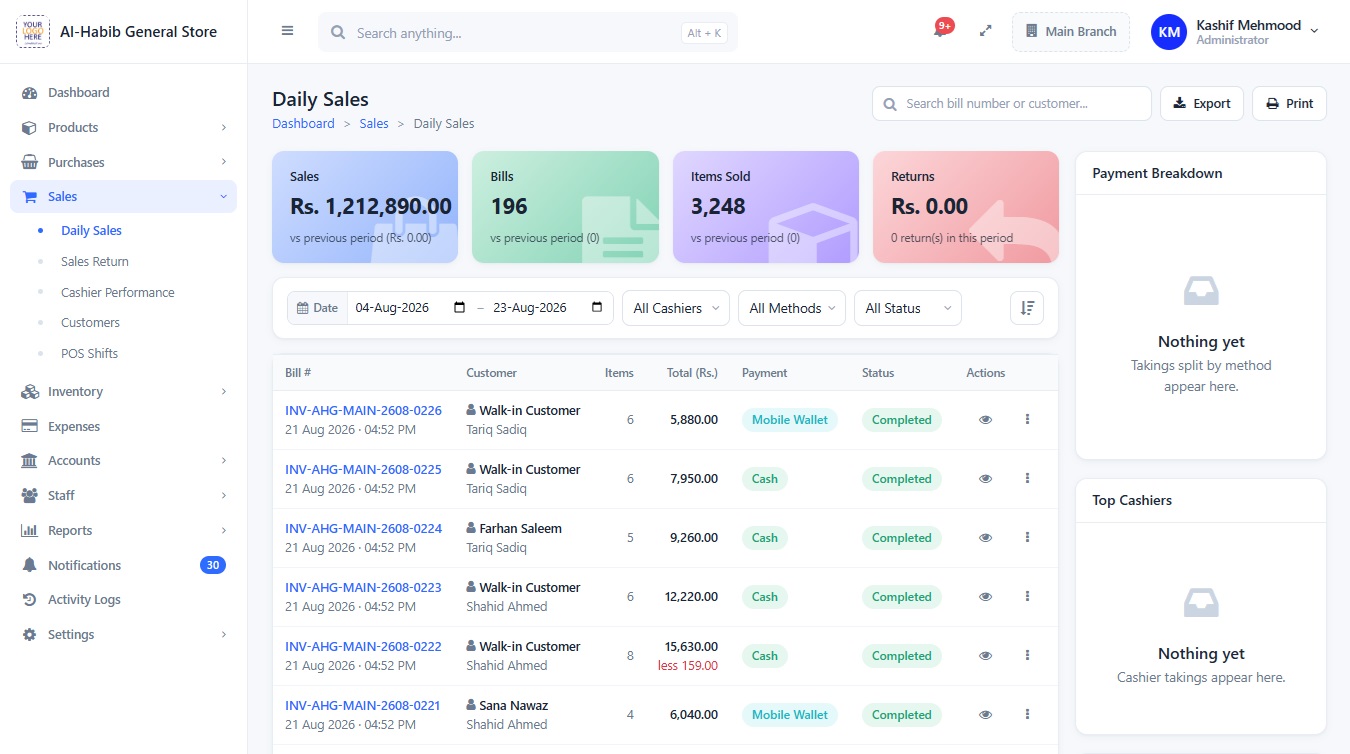
Shops buying from you on account carry a running balance with the full history behind it.
Enter a delivery by the dozen and let it break down into pieces at the rate you actually paid.
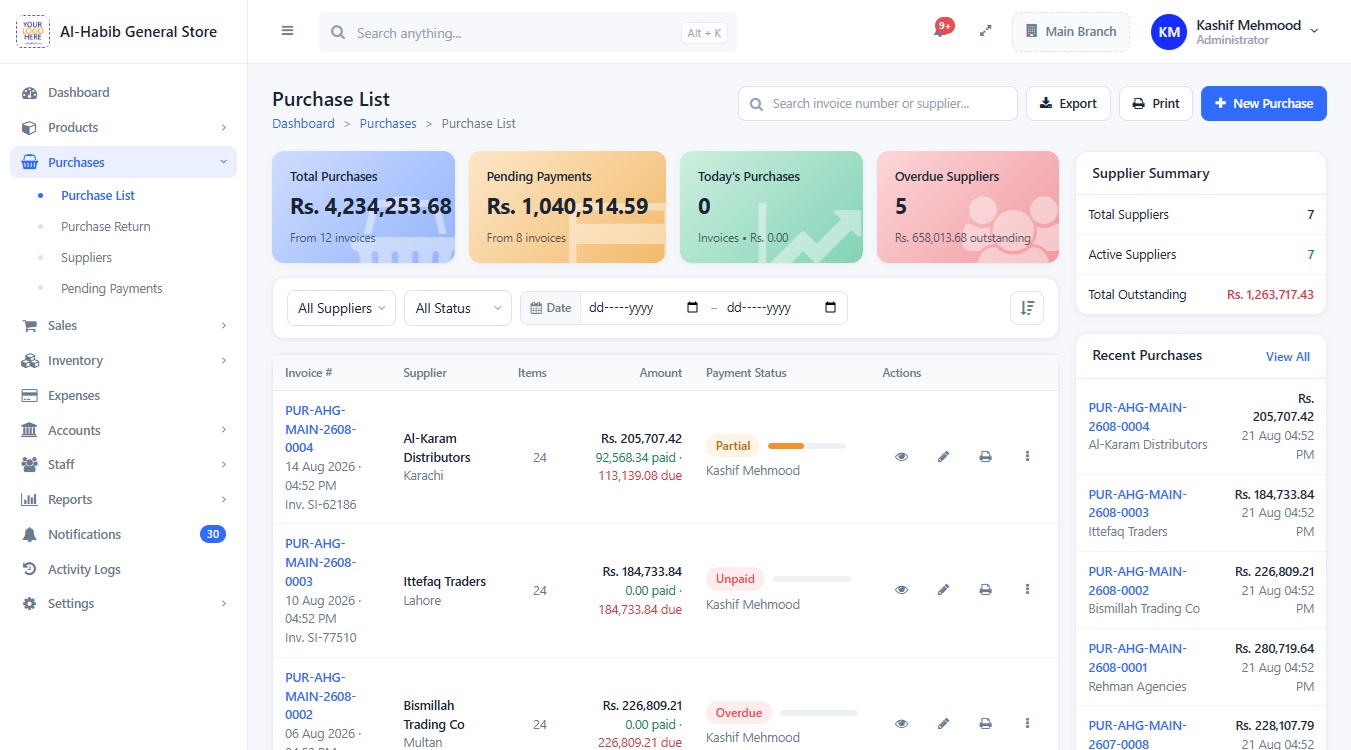
Which sizes, colours and brands sell, and which have been sitting since last season.
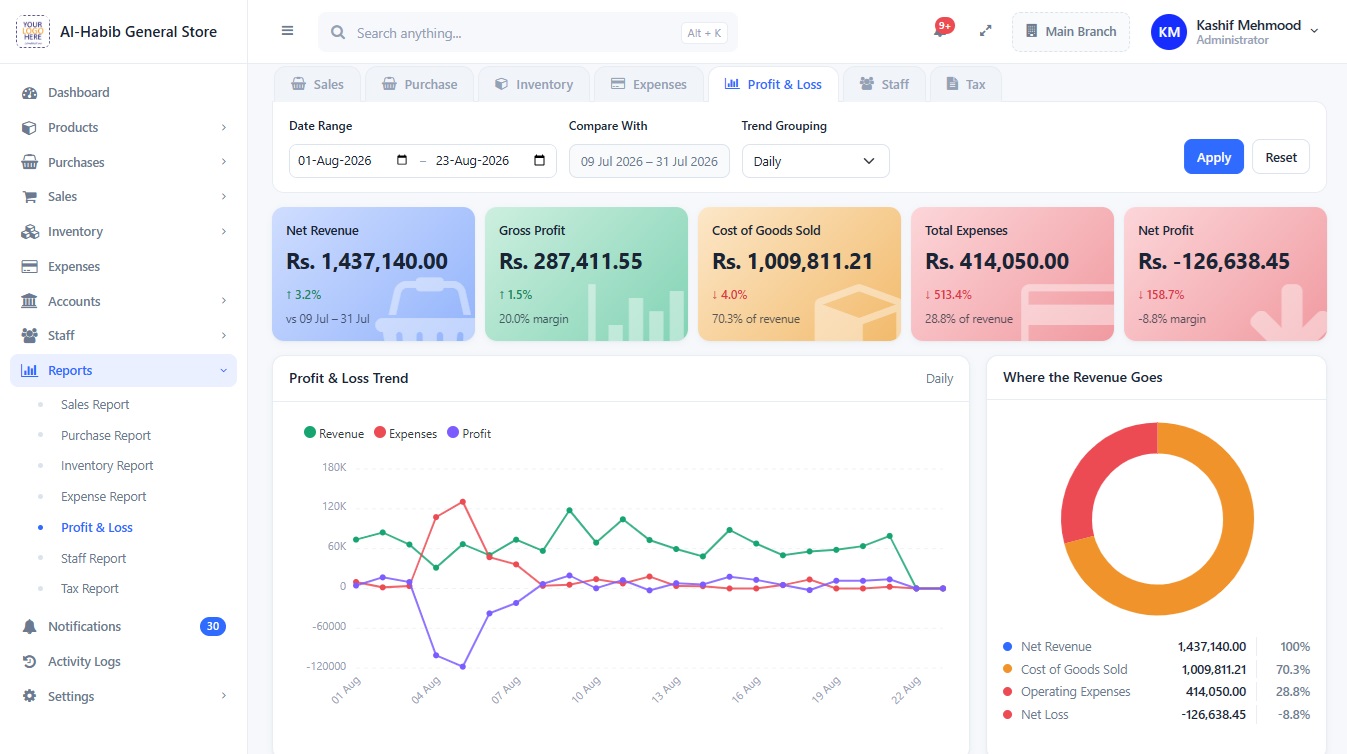
General retail software assumes a product is a product. In this trade a product is an article, a brand, a size and a colour, and all four have to be on the bill and in the stock count.
Each combination carries its own quantity, so the shelf and the screen agree and a reorder is a list rather than a walk round the shop.
Buy by the dozen, sell by the piece, and bill either way without anybody doing the division at the counter.
Two rates on the same article, with the right one chosen by who is buying rather than by who is behind the counter.
Six brands of the same article kept apart, so you can see which one is actually earning rather than which one moves.
Retailers buying on account have a balance, a history and a statement, which is the difference between a ledger and an argument.
Sizes that have not moved in months come up as a list, early enough to clear them while they are still worth something.
Switch it on and every sale goes to the FBR system as you ring it up, with the items, the amounts, the tax rate you charged and the buyer details you entered. onlinePOS transmits exactly what you recorded and never adjusts a rate on the way through. Leave it off and nothing is sent. Either way, your invoices, returns and daily totals stay in one place instead of being rebuilt from a register at the end of the month.
Send the bill to the customer WhatsApp number as you finish the sale. They get a record on their phone, you get one on yours, and the argument three weeks later about what was bought and what was paid ends before it starts.
Nothing here is an add-on and nothing is billed separately. Your undergarments gets all of it from the first day.
Fast billing with barcode support and easy checkout
Real-time stock tracking and low stock alerts
Manage suppliers, purchases & returns
Handle sales returns and track performance
Customer profiles, history and ledger management
Track business expenses and categories
Cashbook, bank, ledger and financial overview
Staff, attendance, shifts and salaries
Powerful reports and insights for decisions
What owners ask us before they start. If yours is not here, message us on WhatsApp.
Yes. onlinePOS handles what an innerwear counter needs specifically: stock held at size and colour level, dozen and piece rates on the same article, brand-wise costing, wholesale and retail pricing, khata and FBR digital invoicing when you want it.
Yes. A vest in nine sizes and six colours is fifty-four separate quantities, and each one is counted on its own. When somebody asks for 85 in black the screen answers without anybody walking to the back.
Yes. An article carries a rate per dozen and a rate per piece. A delivery entered by the dozen breaks down into pieces automatically, so what you bought and what you sell are the same stock in two units.
Yes. Each article can hold both, and the customer on the bill decides which is used. A shop buying twenty dozen and a walk-in buying one piece are billed correctly without anybody having to remember which is which.
Yes. The same article from six brands stays six separate lines with six landed costs, so the reports show margin by brand rather than an average that hides the one you are losing on.
Yes. The reports list slow and dead stock at size level. Most shops find several thousand rupees sitting in two or three sizes they had stopped noticing, while there is still a season left to clear them.
A subscription in Pakistani Rupees, with a free 7 day trial on the full software so you can bill real sales before deciding. Message us on WhatsApp for the figure for your shop.
Start a free 7 day trial with your own articles, brands and sizes loaded, and see a full week of real billing before you commit.

Have questions? Our team is ready to assist you. Reach out to us through any of the channels below.
