
Sizes you only miss when a customer asks
The medium sold out three days ago in the colour everyone wants. You find out standing in front of the customer, and the sale walks to the next shop.
Every article in every size and colour, tagged and tracked, with exchanges and season sales handled the way a clothing shop actually runs them.
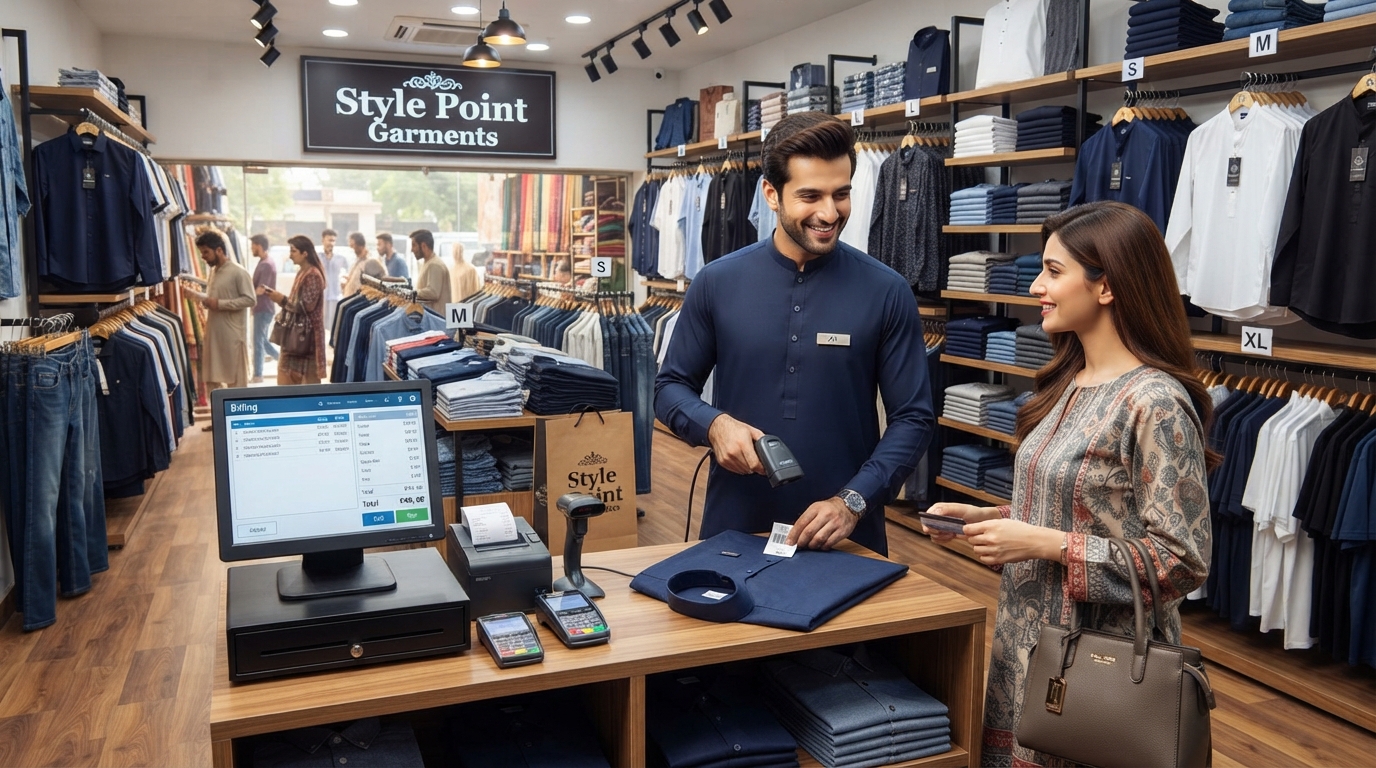
A shirt in five sizes and four colours is twenty things to count, price and reorder, and paper stock has never once got that right.
The medium sold out three days ago in the colour everyone wants. You find out standing in front of the customer, and the sale walks to the next shop.
Garments come back constantly for a different size. On paper the returned piece and the issued piece are two unrelated events, so stock drifts a little further out every week.
End of season means discounting, and nobody knows which articles are still above cost and which are being sold at a loss to clear the rack.
You reorder what you remember shifting. The article that quietly sold out in week two never gets repeated, and the one that did not move gets bought again.
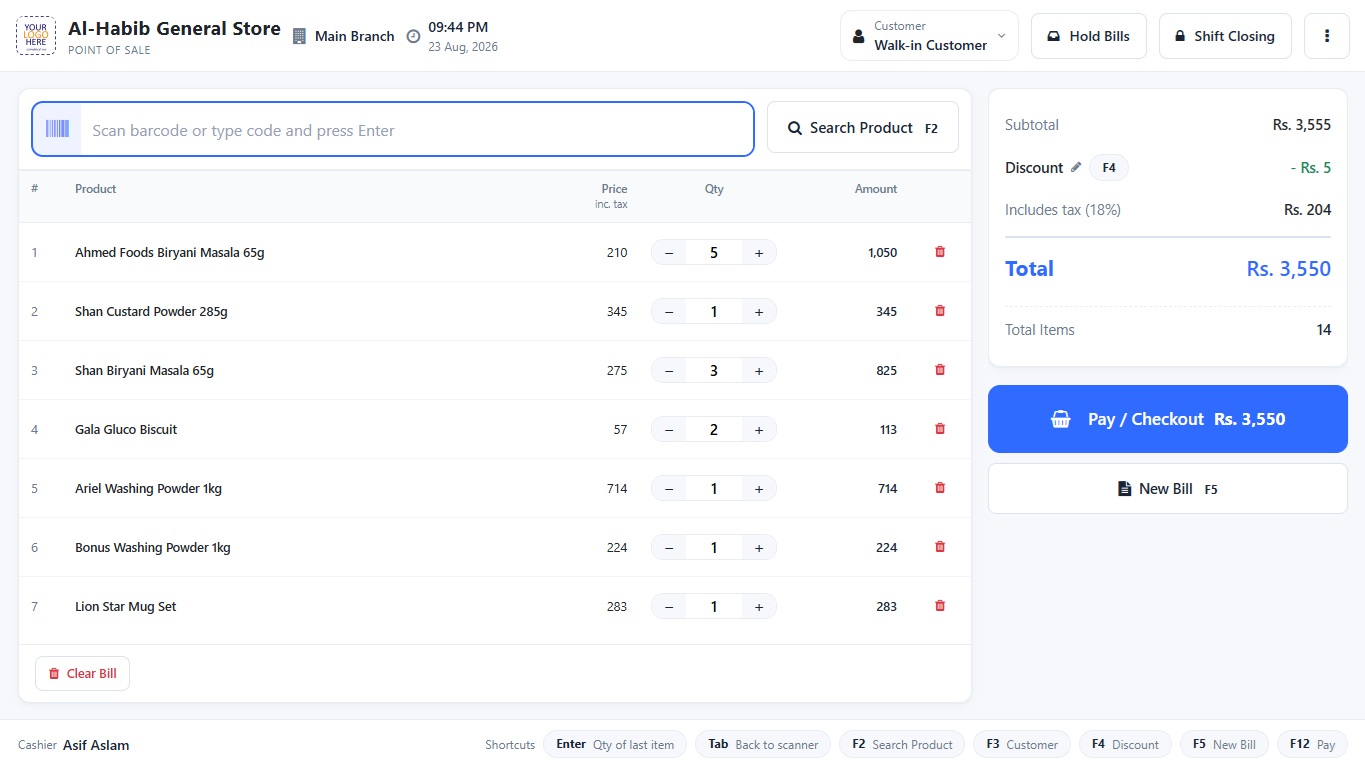
Scan the tag and the article, size and colour are on the bill together.
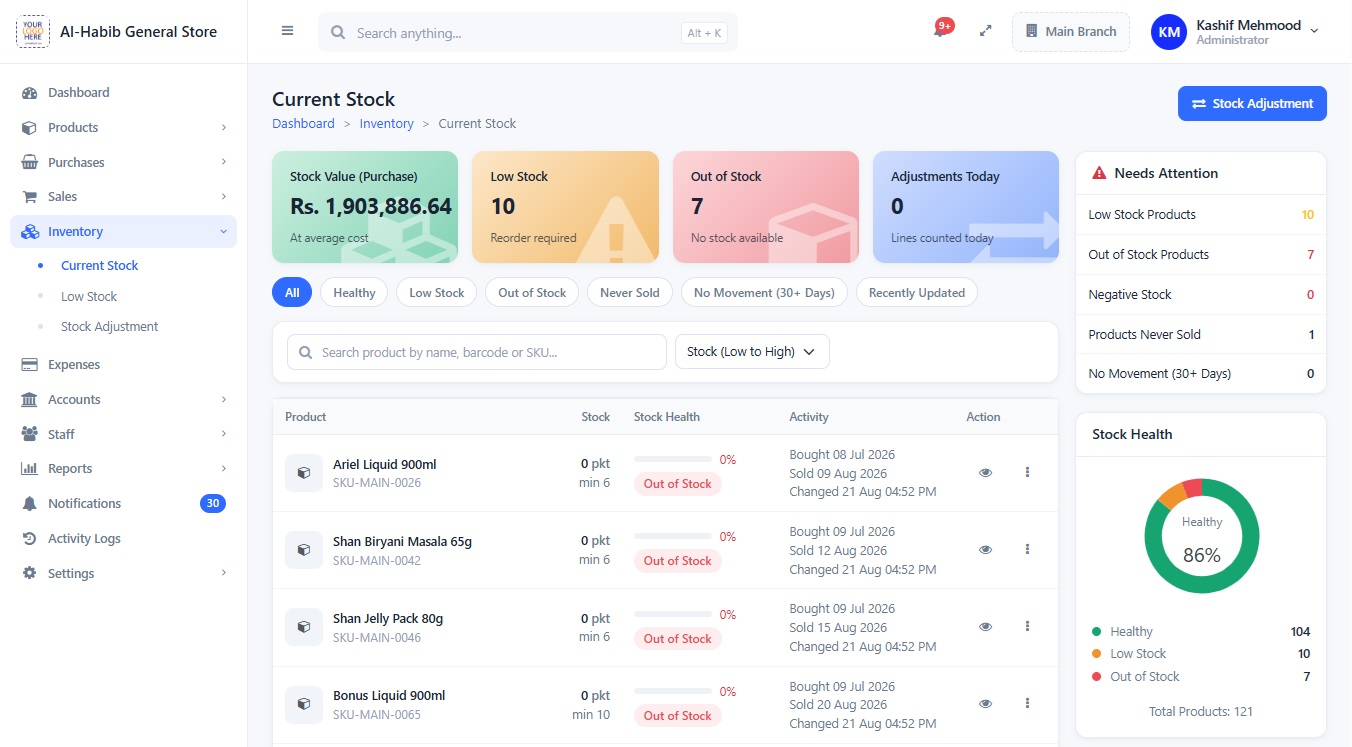
Every size and colour is counted separately under one article.
Regular customers, tailors and wholesale buyers on account each carry a running balance.
Enter what came from the factory or wholesaler by article, size and colour, with rates and discounts.
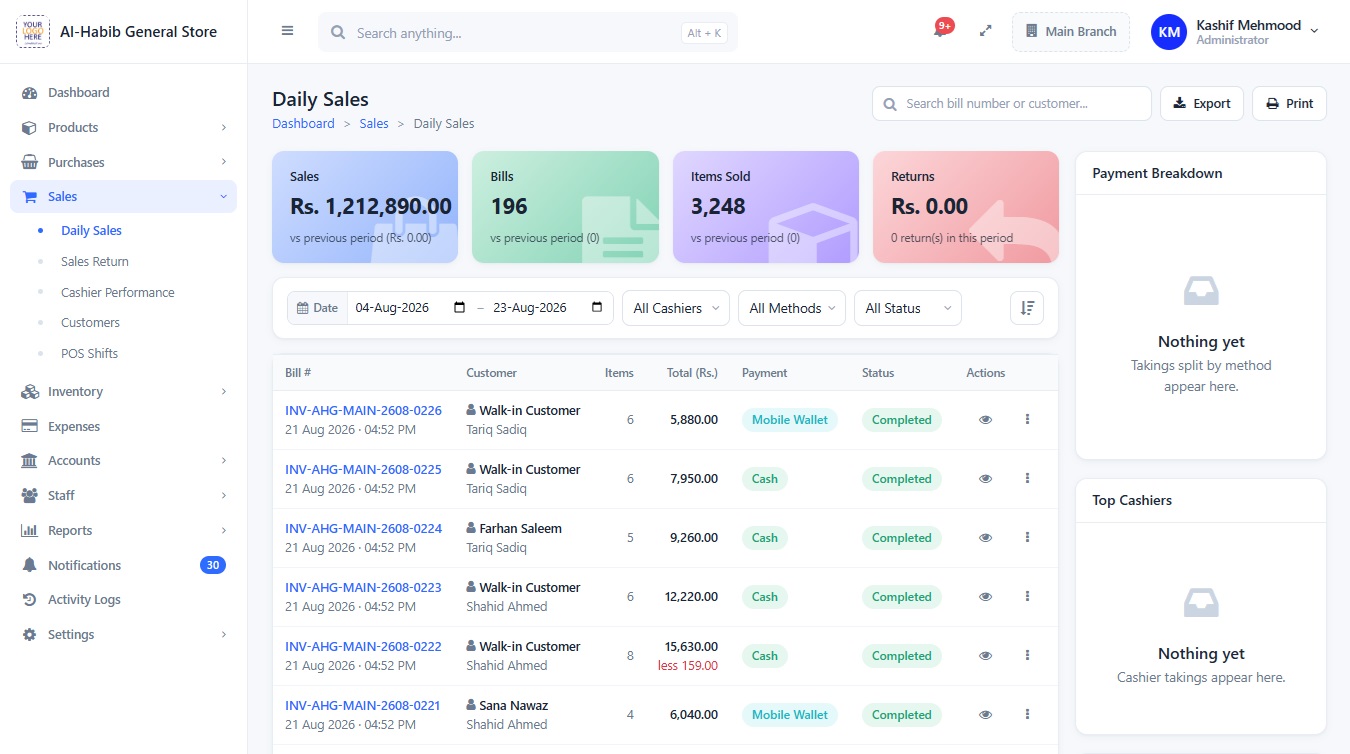
What sold today and what it earned, article by article.
A clothing shop lives on variants and seasons, and software that cannot hold both turns into a spreadsheet nobody updates.
One article, every variant counted separately, so stock answers real questions instead of totals.
Barcode tags generated and printed in the shop for unbranded and stitched stock.
The returned piece and the issued piece are one transaction, so stock stays correct on both sides.
Discount by article or category with the margin visible, so clearance is a decision rather than a hope.
What has been on the rack thirty, sixty and ninety days, so old stock is cleared while it still has value.
Each outlet holds its own sizes and colours, and stock moved between them is recorded.
Switch it on and every sale goes to the FBR system as you ring it up, with the items, the amounts, the tax rate you charged and the buyer details you entered. onlinePOS transmits exactly what you recorded and never adjusts a rate on the way through. Leave it off and nothing is sent. Either way, your invoices, returns and daily totals stay in one place instead of being rebuilt from a register at the end of the month.
Send the bill to the customer WhatsApp number as you finish the sale. They get a record on their phone, you get one on yours, and the argument three weeks later about what was bought and what was paid ends before it starts.
Nothing here is an add-on and nothing is billed separately. Your garments store gets all of it from the first day.
Fast billing with barcode support and easy checkout
Real-time stock tracking and low stock alerts
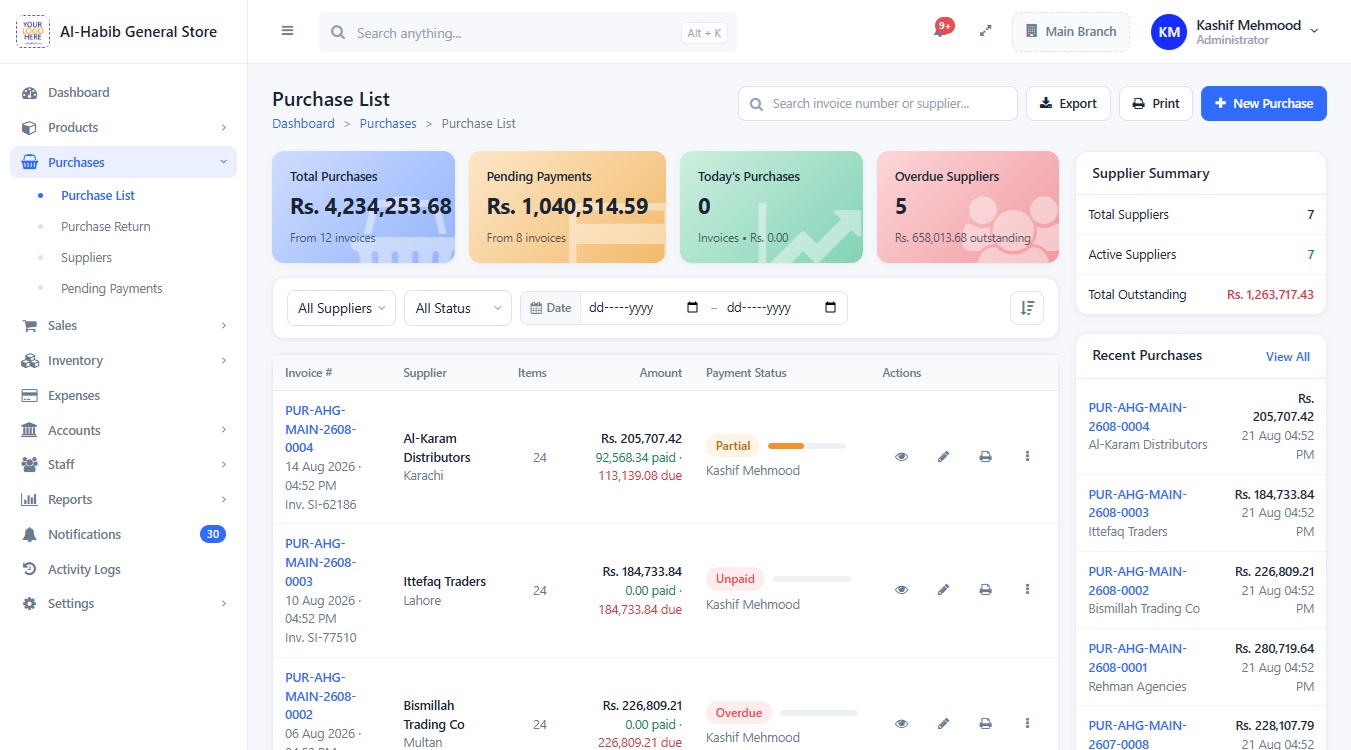
Manage suppliers, purchases & returns
Handle sales returns and track performance
Customer profiles, history and ledger management
Track business expenses and categories
Cashbook, bank, ledger and financial overview
Staff, attendance, shifts and salaries
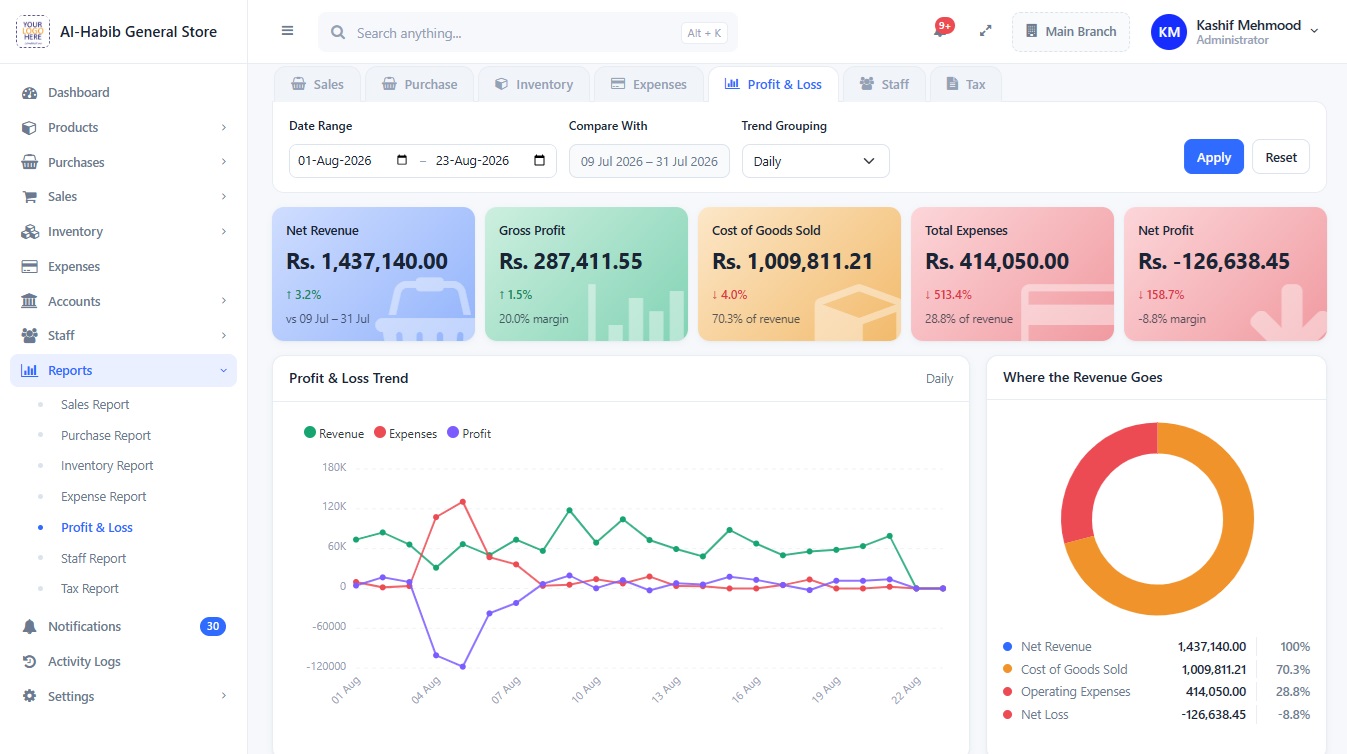
Powerful reports and insights for decisions
What owners ask us before they start. If yours is not here, message us on WhatsApp.
Yes. onlinePOS handles clothing retail specifically: articles broken into size and colour variants, barcode tags printed in the shop, exchanges as a single transaction, season pricing and FBR invoicing when you want it.
Yes. Each size and colour is counted on its own under one article, so you can see that you hold four large navy and none in medium without opening a cupboard.
Yes. The software generates a barcode for any article and variant and prints it on a normal label roll, which is how locally stitched stock becomes scannable.
A return and a fresh issue are recorded as one exchange, so the piece coming back goes into stock and the piece going out comes off it. On paper that is two entries and one of them is usually forgotten.
Yes. You can discount by article or category and see the margin on each before you commit, so you know which racks can carry a bigger cut and which are already close to cost.
Yes. Ageing reports list what has been in stock thirty, sixty and ninety days with the money tied up, which is what tells you what to clear before next season arrives.
A subscription in Pakistani Rupees with a free 7 day trial on the full software. Message us on WhatsApp with your outlet count for the exact figure.
Start a free 7 day trial with your articles and variants loaded, and go into next season knowing what actually sold.

Have questions? Our team is ready to assist you. Reach out to us through any of the channels below.
