
Warranty per component
A machine has eight parts with eight different warranty periods from four suppliers. When one fails, nobody can say what is covered without opening a drawer of invoices.
Serials and warranty on every part, custom builds costed properly, service jobs tracked, and corporate customers billed the way they need to be.
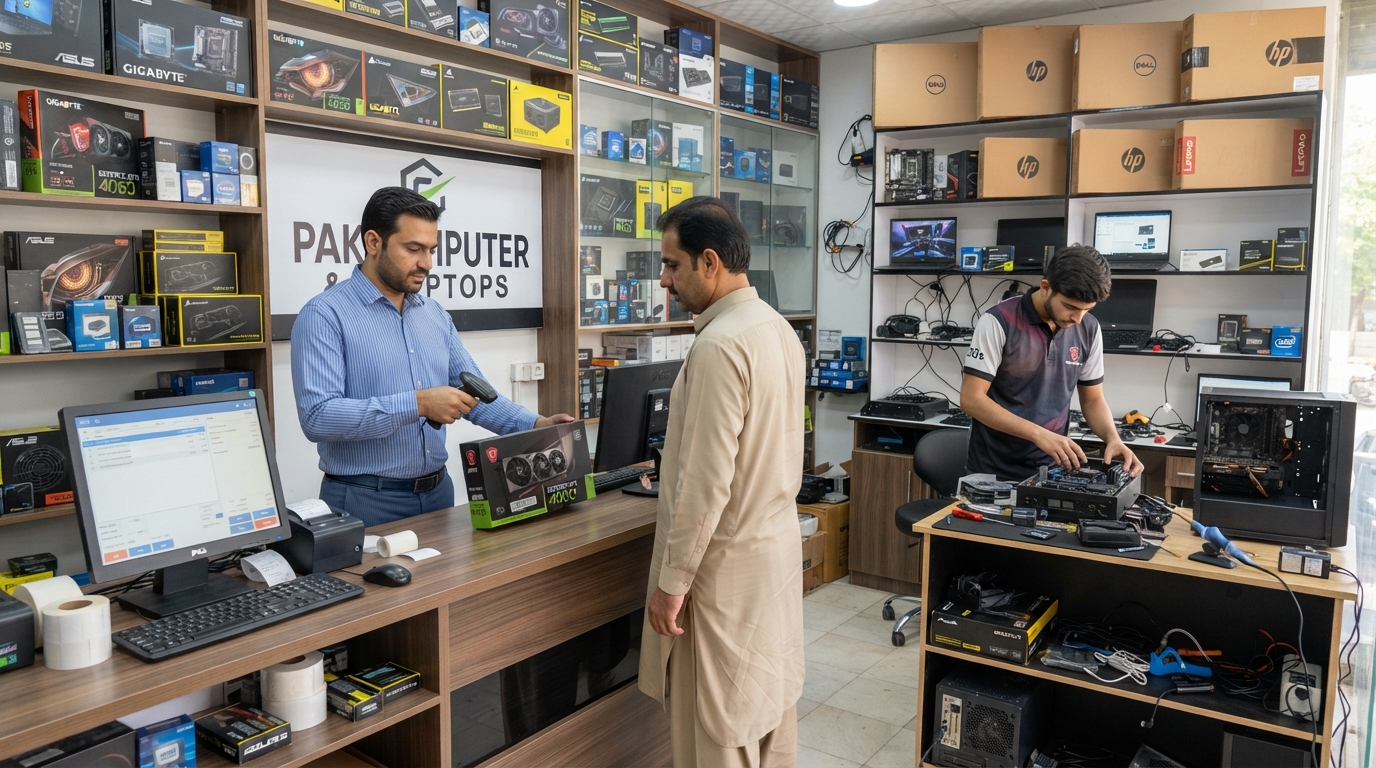
You sell components with individual warranties, assemble machines out of several of them, and repair the ones that come back. Three record-keeping problems, not one.
A machine has eight parts with eight different warranty periods from four suppliers. When one fails, nobody can say what is covered without opening a drawer of invoices.
A custom PC is parts plus labour, sold as one price. Without the build recorded, nobody knows what it actually cost or what it actually earned.
Offices want a quotation first, a delivery note second and an invoice third, and half of them buy on thirty days. That is not a counter sale and cannot be treated as one.
Cables, RAM, drives and adapters age out quickly. Stock that sat six months is often worth less than it cost, and nothing warns you while it still has value.
Bill components with their serial numbers captured, or sell an assembled machine as one item.
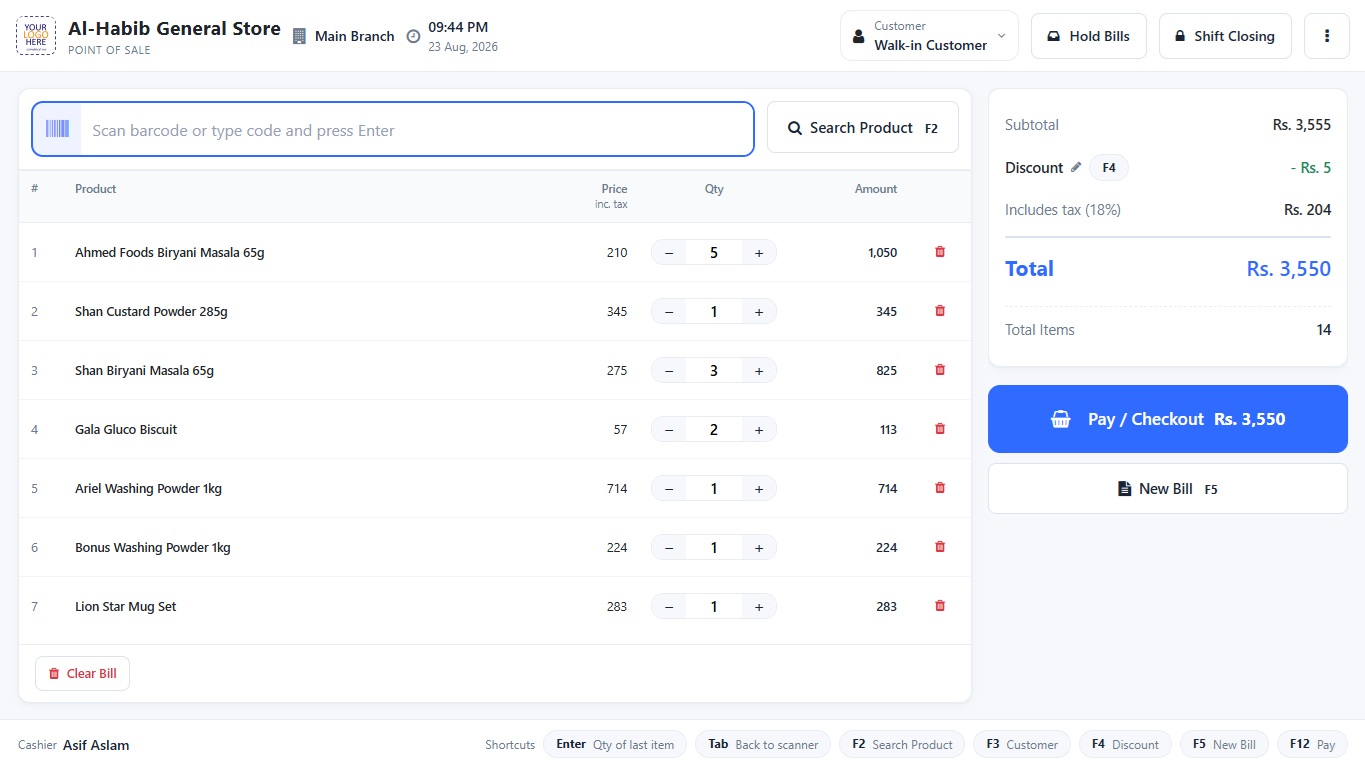
Serial-tracked items are followed individually while cables and consumables are counted normally.
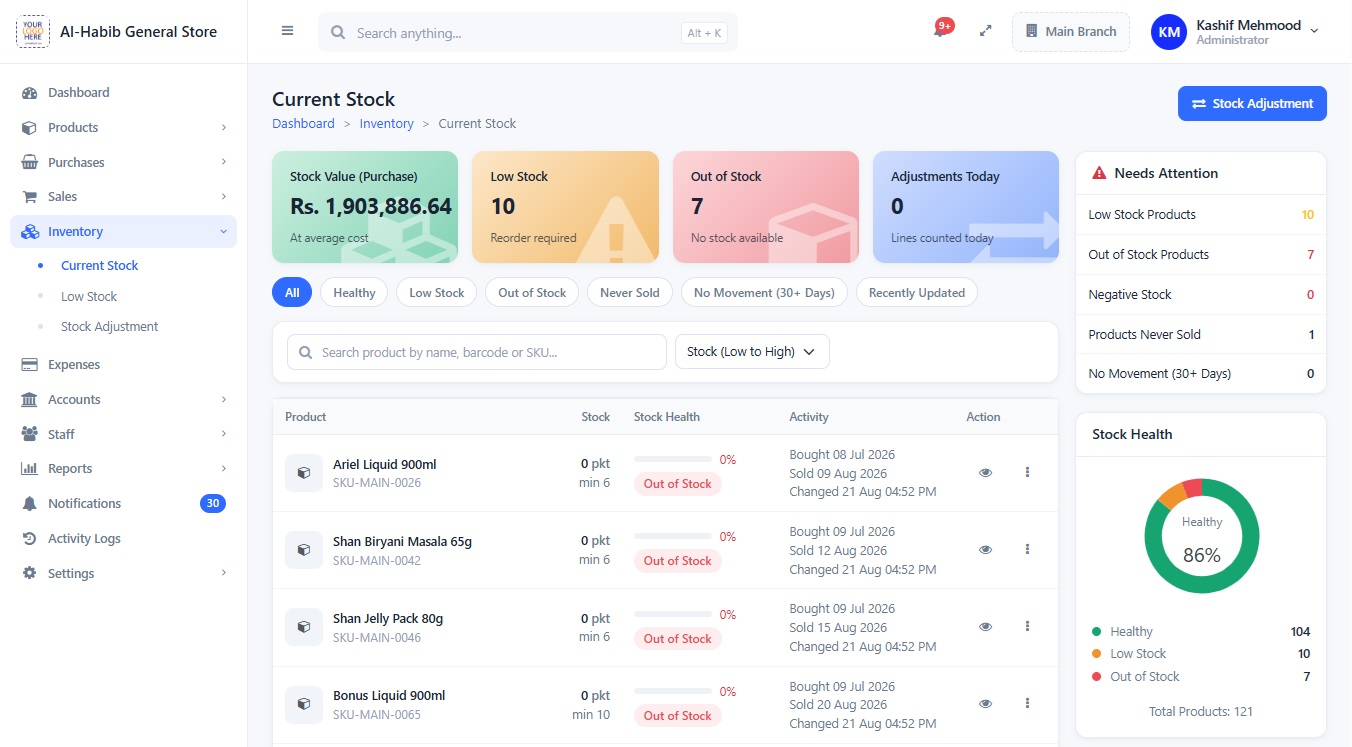
Corporate and account customers carry a running balance with full history and credit terms.
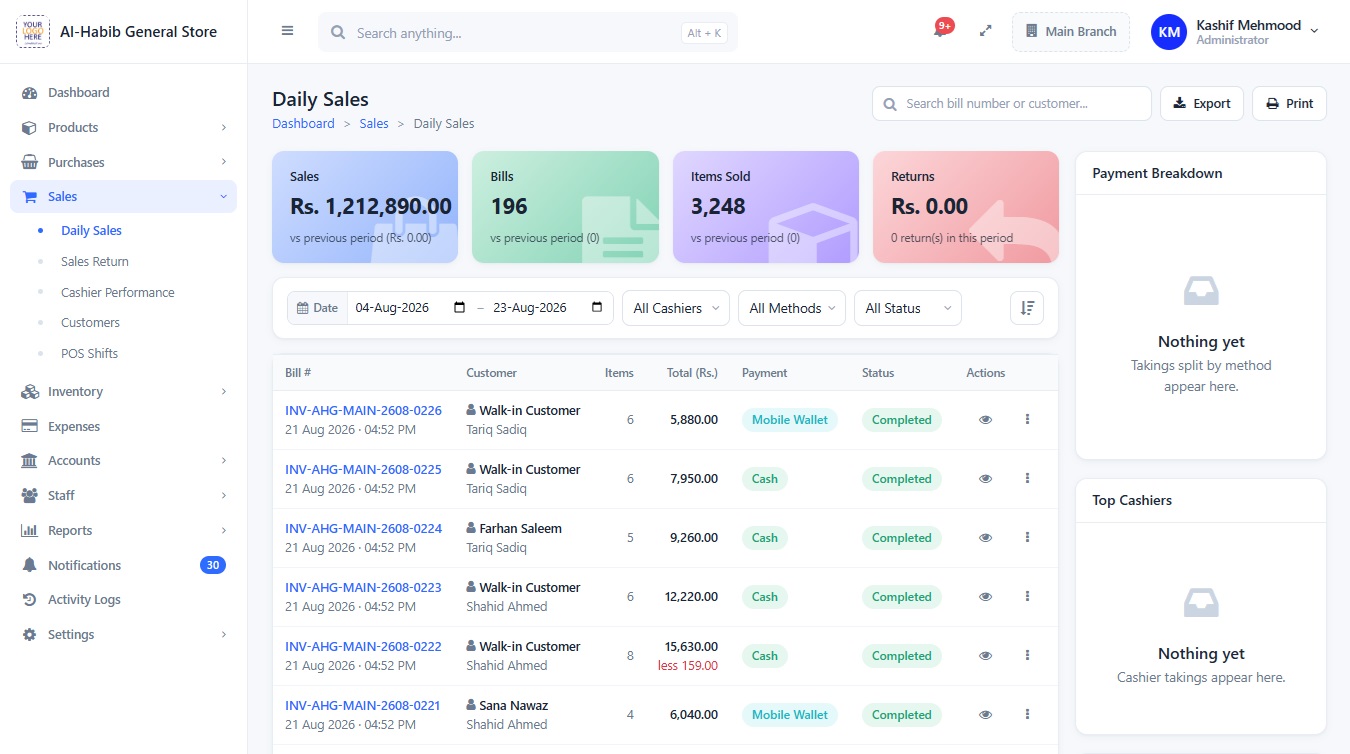
Record what came from each importer with serials, warranty terms and landed cost.
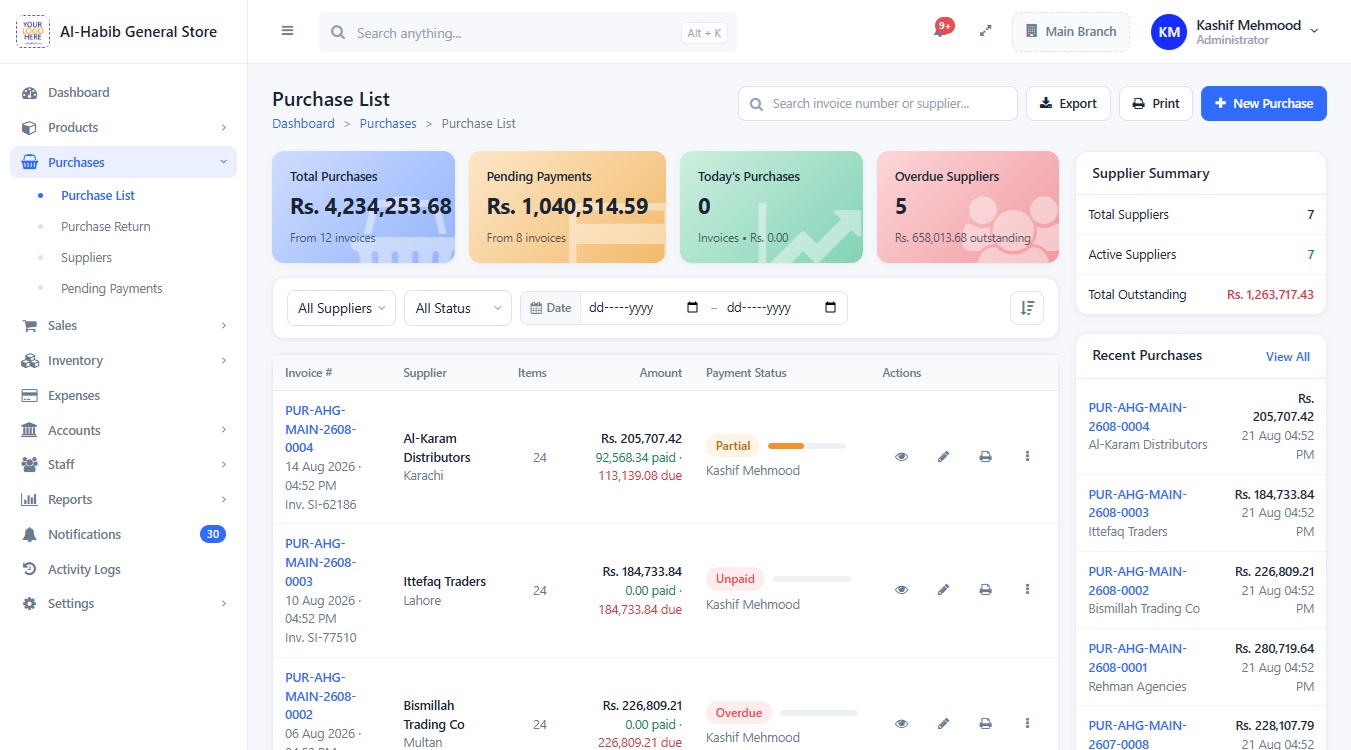
Sales split between hardware, builds and services, because they earn very differently.
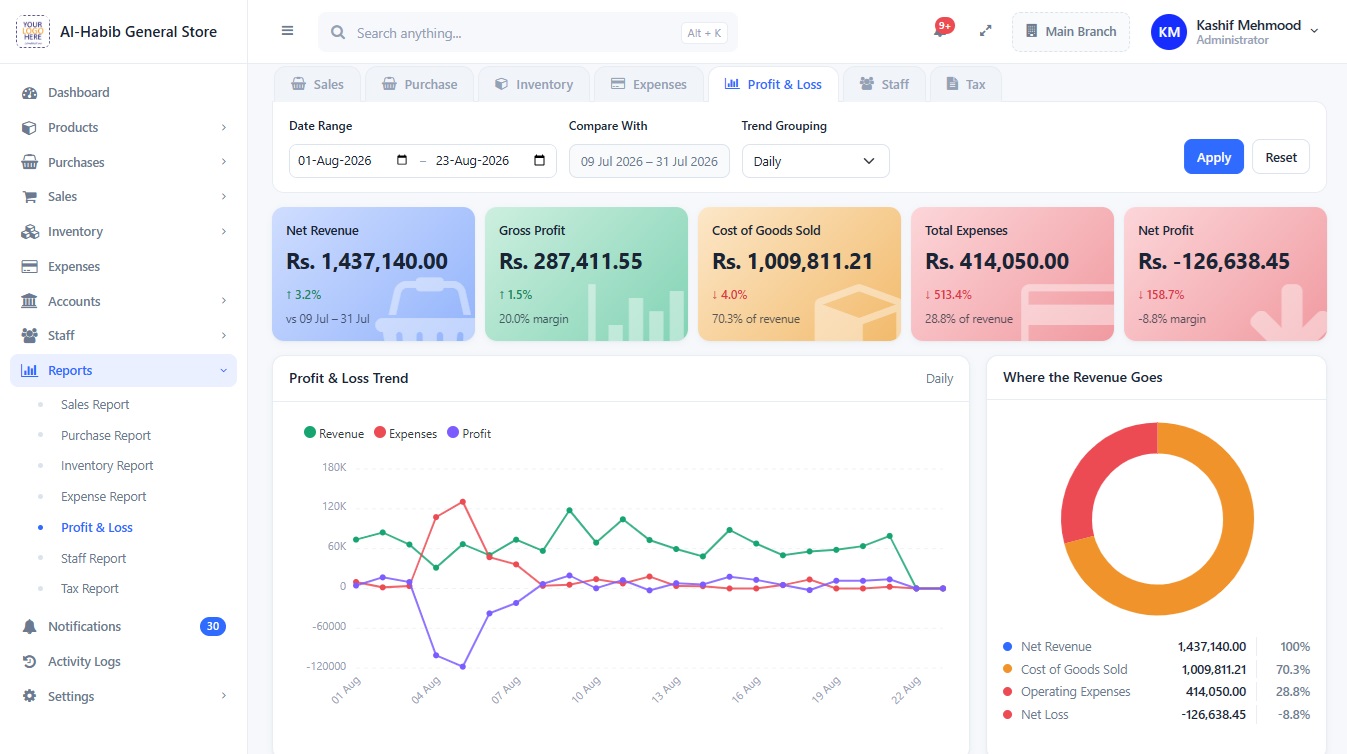
An IT shop is a parts business, an assembly business and a service business sharing one counter and one stock room.
Individual tracking with supplier warranty terms, so a failure is looked up rather than guessed at.
Assemble a machine from components, with the parts coming out of stock and the cost carried into the build.
Jobs recorded with fault, parts used, labour and collection balance.
Corporate quotes converted without retyping, so the numbers cannot drift between the two.
Duty, freight and clearing carried into the cost, so margins are real.
What has sat ninety days, flagged while it is still worth selling.
Switch it on and every sale goes to the FBR system as you ring it up, with the items, the amounts, the tax rate you charged and the buyer details you entered. onlinePOS transmits exactly what you recorded and never adjusts a rate on the way through. Leave it off and nothing is sent. Either way, your invoices, returns and daily totals stay in one place instead of being rebuilt from a register at the end of the month.
Send the bill to the customer WhatsApp number as you finish the sale. They get a record on their phone, you get one on yours, and the argument three weeks later about what was bought and what was paid ends before it starts.
Nothing here is an add-on and nothing is billed separately. Your computer shop gets all of it from the first day.
Fast billing with barcode support and easy checkout
Real-time stock tracking and low stock alerts
Manage suppliers, purchases & returns
Handle sales returns and track performance
Customer profiles, history and ledger management
Track business expenses and categories
Cashbook, bank, ledger and financial overview
Staff, attendance, shifts and salaries
Powerful reports and insights for decisions
What owners ask us before they start. If yours is not here, message us on WhatsApp.
Yes. onlinePOS handles IT retail: serial and warranty tracking per component, custom PC builds assembled from stock, service job records, corporate quotations and credit accounts, and FBR invoicing when you want it.
Yes. Serial numbers and supplier warranty terms are recorded at purchase and carried to the sale, so when a part fails you can see exactly what is covered and for how long.
Yes. A build takes components out of stock and carries their cost into the assembled machine, so you can see what the build actually cost against what it sold for.
Yes. A quotation can be issued and later converted into an invoice without retyping, and corporate customers carry credit terms and a running balance.
Yes. Purchases carry additional charges so the cost against each item is the landed cost rather than the invoice value, which matters when margins are thin.
Yes. Jobs are recorded with the fault, the parts used, the labour charged and the balance due at collection.
A subscription in Pakistani Rupees with a free 7 day trial on the full software. Message us on WhatsApp for the figure for your shop.
Start a free 7 day trial with your components and opening stock loaded, and price your next build on real numbers.

Have questions? Our team is ready to assist you. Reach out to us through any of the channels below.
